Blog Details
White Label Yak Chews vs Private Label Yak Chews
The pet industry is still developing all around the globe, and people who own dogs want natural, healthy, and durable treats for their furry pets. Nowadays, among the best treats that are available on the market are yak chews or Himalayan dog chews.
The addition of yak chews to your pet company’s product line will allow you to create new sales opportunities and improve your brand value. But at the same time, there is a question that most pet businesses should answer before selling these treats: Do you need to have white-label yak chews or private-label yak chews?
In this guide, we'll explain the differences, advantages, and factors to consider when choosing the best option for your brand.
What Are Dog Yak Chews?
Yak chews are natural dog treats traditionally made from female yak milk, also known as nak, and cow milk. They are produced using a simple process that contains yak milk, cow milk, salt, and lime juice. The chews are then dried and smoked to create a hard, long-lasting treat.
Pet owners prefer yak chews because they are:
- High in protein
- Long-lasting
- Digestible
- Low in odor
- Free from artificial ingredients
- Suitable for aggressive chewers
As demand grows in the USA, UK, Canada, Europe, Australia, and other markets, more pet brands are adding yak chews to their product lines.
What are White Label Dog Yak Chews?
White-label dog yak chews are ready-made products produced by a manufacturer and sold to multiple businesses. The product formula, size options, and packaging structure are usually already established.
The buyer simply adds their brand name, logo, and label to the product.
In simple words, the product is already created. You market and sell it under your own brand.
Benefits of White Label Dog Yak Chews
- Faster Market Entry: White label products allow businesses to launch quickly because the product development process is already complete.
- Lower Investment: There are usually lower setup costs compared to creating a fully customized product line.
- Smaller Risk: Businesses can test market demand without making a large financial commitment.
- Easier Inventory Planning: Manufacturers often have established production systems that help ensure a steady supply.
Who Should Choose White Label?
White-label yak chews are best for:
- New pet brands
- Pet stores
- Online pet businesses
- Amazon sellers
- Subscription box companies
- Businesses are testing a new product category
What are Private Label Dog Yak Chews?
Private-label yak chews allow businesses to create a more customized product under their own brand.
While the manufacturer produces the chews, the buyer has more control over product specifications and branding.
Depending on the supplier, businesses may customize:
- Product sizes
- Product mix
- Packaging design
- Label design
- Branding elements
- Product bundles
- Specialty chew options
The product becomes more unique to the brand.
Benefits of Private Label Dog Yak Chews
- Stronger Brand Identity: Private labeling helps create a unique appearance that customers associate with your company.
- Better Market Positioning: You can design packaging and product offerings that fit your target audience.
- Greater Customer Loyalty: Customers are more likely to remember a distinctive brand than a generic product.
- Higher Perceived Value: Premium packaging and customized branding can support premium pricing.
Who Should Choose Private Label?
Private label yak chews are ideal for:
- Established pet brands
- Growing e-commerce businesses
- Pet distributors
- Specialty pet retailers
- International importers
- Businesses building long-term brand value
White Label vs. Private Label Dog Yak Chews: Key Differences
| Feature | White Label Dog Yak Chews | Private Label Dog Yak Chews |
| Product Developmen | Ready-made products | More customizable products |
| Time to Launch | Fast, often within weeks | Longer due to design and approval processes |
| Startup Cost | Lower investment | Higher upfront investment |
| Minimum Order Quantity (MOQ) | Usually lower | Usually higher |
| Product Customization | Limited customization | Greater customization options |
| Packaging Options | Basic or standard packaging | Fully customized packaging |
| Label Design | Logo and brand name added | Fully customized label design |
| Brand Identity | Limited brand uniqueness | Strong brand identity |
| Product Exclusivity | Not exclusive | More exclusive to your brand |
| Market Differentiation | Moderate differentiation | Strong differentiation |
| Cost Per Unit | Generally lower | May be higher depending on customization |
| Packaging Costs | Lower | Higher due to custom designs |
| Retail Shelf Appeal | Standard appearance | Premium and unique appearance |
| Profit Margin Potential | Good | Often higher with premium positioning |
| Scalability | Easy to start and scale | Ideal for long-term growth |
| Best For | Startups, pet stores, Amazon sellers, new brands | Established pet brands, distributors, importers, and wholesalers |
| Primary Business Goal | Quick market entry with lower risk | Long-term brand building and market growth |
For pet businesses, the right choice depends on your business goals. If you want to launch a product quickly, test market demand, and keep your initial investment low, white-label dog yak chews can be a good option. They allow you to start selling faster with less risk.
If your goal is to build a unique pet brand, create custom packaging, and stand out from competitors, private-label dog yak chews may be the better choice. While they require a larger investment, they can help increase customer loyalty and create long-term value for your business in the USA, UK, and other international pet markets.
Important Questions Pet Brands Should Ask Suppliers
Before choosing either option, pet businesses should ask suppliers several important questions.
1. Where Are the Yak Chews Manufactured?
The origin of dog yak chews can impact quality and consistency. Many pet brands prefer manufacturers with experience producing authentic Himalayan yak chews. Ask where the products are made and where the ingredients are sourced.
2. What Quality Certifications Are Available?
Look for suppliers that follow recognized quality and food safety standards. Like FDA registration, HACCP (Hazard Analysis and Critical Control Points), and ISO 22000
3. Can Products Be Exported Internationally?
If you sell in multiple countries, choose a supplier with export experience. Ask if they can provide the required documents, health certificates, and shipping support for international markets.
4. What Are the Minimum Order Quantities?
MOQs can vary between suppliers and programs. White-label products often have lower MOQs, while private-label products may require larger orders. Understanding MOQs helps with inventory and budget planning.
5. What Packaging Options Are Available?
Packaging can influence customer buying decisions. Ask about custom labels, retail-ready packaging, and eco-friendly options that match your brand and target market.
6. How Is Product Quality Controlled?
Ask suppliers about their quality control process, inspections, and testing procedures. Strong quality control helps ensure consistent products and better customer satisfaction.
7. Can the Supplier Support Business Growth?
Choose a supplier that can grow with your business. Ask about production capacity and their ability to handle larger orders as your brand expands.
Which Option Is Better for International Pet Brands?
There is no one-size-fits-all answer. If you are entering the market for the first time, white-label dog yak chews may be the best option because they require less investment and allow faster product launches.
If you already have an established customer base and want to build a strong brand identity, private-label dog yak chews often provide greater long-term value.
Many successful pet businesses start with white-label products and later transition to private-label programs as their sales grow.
Common Mistakes to Avoid
When sourcing yak chews, avoid these common mistakes:
- Choosing suppliers based only on price
- Ignoring product quality standards
- Overlooking packaging quality
- Failing to check export experience
- Ordering excessive inventory initially
- Not requesting product samples
- Neglecting long-term supplier relationships
A reliable supplier partnership is often more valuable than finding the lowest price.
Conclusion
Both white-label and private-label dog yak chews can be excellent opportunities for pet businesses looking to expand their product offerings.
White-label options offer convenience and affordability, while private-label options promise better branding and differentiation. Ultimately, which one is better for you will depend on your business objectives, target audience, budget, and plans for growth. It’s important to carefully assess your prospective supplier, quality specifications, packaging options, and brand plans before committing to either option.
With the right approach, yak chews for dogs can become a profitable and trusted product category for your pet business in the USA, UK, Europe, Australia, and other international markets.
Partner with Abiral Himalayan Dog Chew
Looking for a reliable bulk supplier of premium yak chews from Nepal?
At Abiral Himalayan Dog Chew, we offer high-quality white-label and private-label yak chews for pet businesses worldwide. With consistent quality, flexible branding options, and dependable export support, we're here to help your business grow.
Get in touch today to discuss your wholesale requirements and build your brand with confidence.
Frequently Asked Questions (FAQs)
1. What is the difference between white-label and private-label dog yak chews?
White-label dog yak chews are finished products to be sold by various companies under their brands. Private label dog yak chews offer more customization in packaging, branding, and product options, helping businesses create a more unique market presence.
2. Which option is better for a new pet brand: white label or private label?
A white-label yak chews solution is more preferable for a startup pet brand since it requires less investment and a shorter time to market. Private label products are usually more suitable for businesses that want stronger branding and long-term market differentiation.
3. What should pet businesses look for in a dog yak chew supplier?
The criteria for pet companies to consider when choosing yak chews supplier are product quality, manufacturing practices, experience in exports, packaging possibilities, production volume, and consistency. A reliable supplier should also provide clear communication, product samples, and support for growing order volumes.
4. Are dog yak chews a profitable product for pet businesses?
Dog chews can be considered profitable products since they are very popular treats for dogs among owners who look for natural and durable treats for their animals. Their premium positioning often allows pet brands and retailers to achieve healthy profit margins.
5. How can private-label dog yak chews help build a stronger pet brand?
Private label dog yak chews allow for creating custom packaging and a unique brand that distinguishes the product from the competitors and allows customers to recognize it easily and establish trust in the long-run.
6. What certifications should pet businesses ask for when sourcing dog yak chews?
Pet businesses should ask suppliers about food safety, quality control, export documentation, and manufacturing standards. Proper certifications help ensure product quality, compliance, and smoother entry into international pet markets.
7. Does Abiral Himalayan Dog Chew provide white-label and private-label solutions?
Yes, we do. Abiral Himalayan Dog Chew provides white-label and private-label dog yak chew solutions for your pet business anywhere around the world. We help you launch quickly by providing ready-to-sell products or even designing your own packaging and branding.
8. Can dog yak chews be sold in international markets?
Yes, yak cheese chews are sold in the USA, UK, Europe, Canada, Australia, and many other countries. Businesses should work with experienced exporters who understand international shipping requirements and market regulations.
9. What are the common challenges when sourcing dog yak chews?
Common challenges include inconsistent product quality, supply delays, limited packaging options, and poor communication from suppliers. Choosing an experienced manufacturer can help businesses reduce risks and maintain reliable inventory levels.
10. What products does Abiral Himalayan Dog Chew offer?
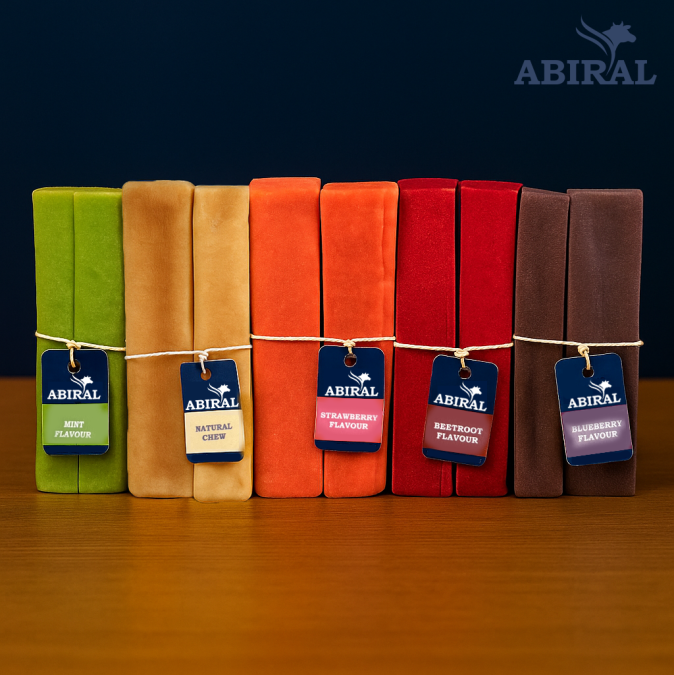
Abiral Himalayan Dog Chew offers a wide range of natural yak milk dog treats for wholesale, white label, and private label partners. Our product line includes Blueberry Yak Chews, Strawberry Yak Chews, Turmeric Dog Chews, Yak Chew Bars, Dog Chew Nuggets, Puffed Nuggets, and Yak Milk Dog Protein Powder. Explore our yak chew products to find the right solution for your brand.
11. How do pet businesses choose the right dog yak chew sizes for their customers?
Most brands offer multiple sizes to serve small, medium, and large dogs. Understanding customer preferences and dog size categories helps businesses select the right product mix and improve customer satisfaction.
12. Why are dog yak chews becoming more popular among pet owners?
Dog owners increasingly prefer natural treats made with simple ingredients. Yak cheese chews are long-lasting, high in protein, and free from many artificial additives, making them a popular choice in the growing natural pet treat market.
13. Can I Import Himalayan Yak Chews from Nepal to Japan?
Yes, Japanese businesses can import Himalayan yak chews from Nepal, provided they meet the relevant import, safety, quarantine, and labeling requirements. Read our complete guide on how to import Himalayan yak chews from Nepal to Japan to understand the process and required documentation.
Recent Posts