Blog Details
How to Import Himalayan Yak Chews from Nepal to Japan
Japan has one of the most developed pet markets in the world with dog owners increasingly seeking healthier, more natural and premium quality treats. Consumer demand for unique products with functional benefits (and a good story) is being driven by a rising understanding of ingredients, sourcing and product safety.
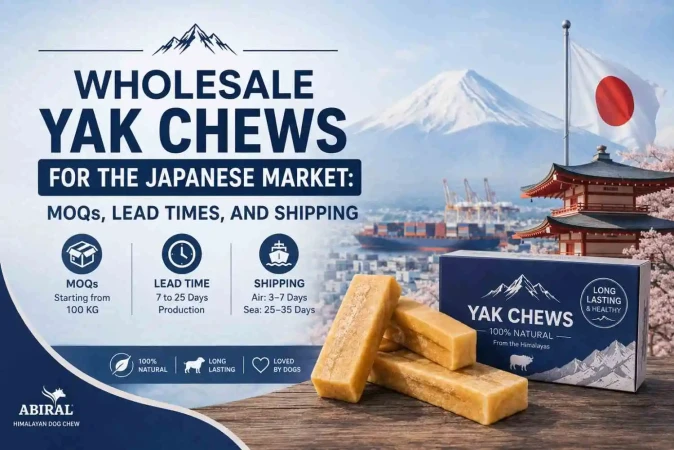
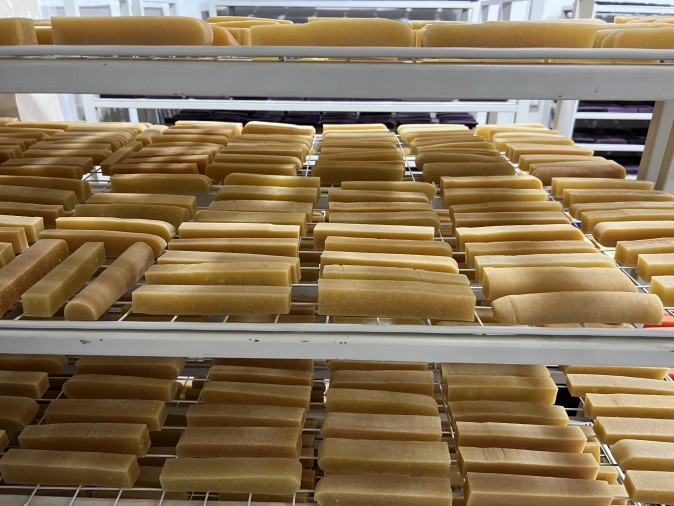
Made using traditional Himalayan cheese-making methods, the premium natural dog treat is a protein-rich chew of Himalayan yak that will last for hours. Introducing yak chews to the Japanese market would give Japanese pet stores, wholesalers, distributors and online retailers access to a fast-growing segment of natural pet products.
But entering the Japanese market requires planning. Japan has strict standards for imported pet food products and businesses must ensure that their products meet food safety, labeling and documentation requirements before they can be distributed.
In this article we will learn how to import Himalayan yak chews into Japan with this step-by-step guide, including regulatory requirements, compliance documents, and useful advice for businesses.
Why Import Himalayan Yak Chews from Nepal?
Nepal has a long tradition of producing Himalayan-style cheese products using milk sourced from local farming communities. This heritage gives yak chews a strong product story that appeals to premium pet consumers.
Unlike mass-produced dog treats, Himalayan yak chews can be positioned as a specialty product with several market advantages:
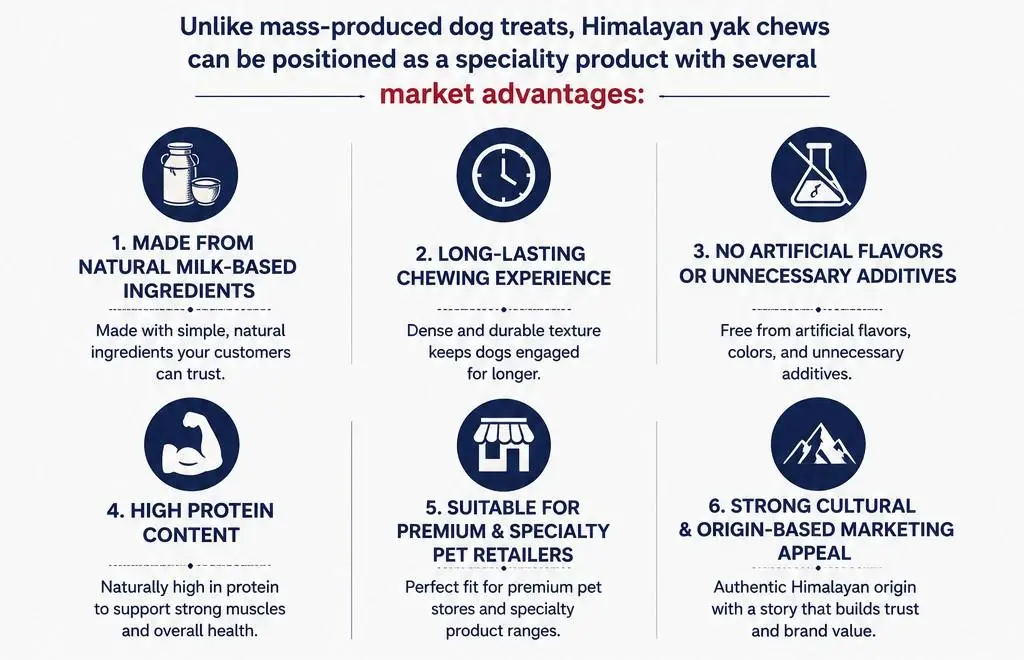
- Made from natural milk-based ingredients
- Long-lasting chewing experience
- No artificial flavors or unnecessary additives
- High protein content
- Suitable for premium and specialty pet retailers
- Strong cultural and origin-based marketing appeal
The opportunity for Japanese companies isn't simply to sell another dog treat, it's to sell a product that's real and authentic and comes with all of the craft and premium-ness of a premium product.
Understanding Japan’s Pet Food Import Regulations
Before importing Himalayan yak chews, businesses must understand Japan’s requirements for pet food products. The main regulation governing pet food products are
Act on Ensuring Quality and Safety of Pet Food (Japan Pet Food Safety Act)
The Pet Food Safety Act regulates the manufacturing, import, and sale of pet food in Japan. This is done in order to ensure the safety of the animal, as well as the proper labeling of various pet food products and the exclusion of harmful substances from them. The Japanese importer must ensure imported yak chews are compliant. In other words, it is on the importers to check supplier documentation, product safety info, and labeling requirements ahead of shipment.
Understanding Japan's Animal Quarantine Requirements for Dairy-Based Chews
Beyond the Pet Food Safety Act, Himalayan yak chews must also clear Japan's Animal Quarantine Service (AQS), which operates under the Ministry of Agriculture, Forestry and Fisheries. This is a separate approval system from pet food labeling and safety rules, and for a milk-based product, it is usually the more demanding step.
Why yak chews fall under animal quarantine
Yak chews are made from the milk of cloven-hoofed animals (yak and cow). Japan regulates dairy products from cloven-hoofed animals specifically because raw milk can carry pathogens linked to livestock diseases such as foot-and-mouth disease. Nepal is named on Japan's list of countries subject to this dairy quarantine requirement, meaning shipments cannot clear customs on pet food documentation alone, they need animal quarantine clearance as well.
What does AQS requires
For dairy products originating in a regulated country, Japan generally requires an official inspection certificate issued by a competent government authority in the exporting country (in this case, Nepal), confirming that the product is not likely to spread pathogens of animal infectious disease. This certificate, if absent, can cause a shipment to be held, rejected or destroyed at the border, even if the rest of the documentation package is 100% complete.
Practical implications for importers
- Check with your Nepalese supplier, in advance of the first shipment, about whether they will be able to obtain a official inspection certificate issued by the government that is suitable for AQS submission.
- Because processing method affects risk classification (fully dried, aged, or heat-treated products are viewed differently than raw dairy), it's worth confirming with AQS or a customs broker how a specific yak chew formulation will be classified before committing to a large order.
- AQS approval and Pet Food Safety Act compliance are handled by different parts of the process, and passing one does not mean the product automatically satisfies the other.
- Requirements can change with the disease-outbreak status of the exporting country, so importers should verify current rules directly with AQS (https://www.maff.go.jp/e/policies/ap_health/petfood/index.html ) before every new shipment, not just the first one.
Step 1: Selecting a Reliable Himalayan Yak Chew Supplier in Nepal
The first step in a successful import process is choosing a supplier that understands international export requirements. Japanese buyers should evaluate suppliers based on:
- Experience exporting pet products
- Production capacity
- Quality control procedures
- Traceability systems
- Manufacturing hygiene standards
- Ability to provide compliance documents
A reliable supplier will be able to explain the whole production process, from sourcing milk ingredients to how it finally gets packaged.
For long-term partnerships, Japanese distributors should prioritize suppliers that deliver consistent quality between production batches.
Step 2: Confirm Product Classification and Import Requirements
It is recommended that the importer verifies the classification of the product in Japan before placing the order. Himalayan yak chews are generally treated as: Pet food/dog chew treats The importer should confirm:
- Correct customs classification
- Import procedures
- Required documentation
- Labeling obligations
An experienced customs broker in Japan can help prevent delays caused by improper classifications or incomplete paperwork.
Step 3: Confirming a Manufacturer and Food Safety Requirement
For products entering the premium pet market, Japanese buyers have high expectations for quality control. Suppliers are best advised to adhere to globally recognised food safety practices such as:
Good Manufacturing Practices (GMP)
GMP ensures that products are manufactured under controlled conditions. Important areas include:
- Clean production facilities
- Proper equipment maintenance
- Hygiene controls
- Safe storage procedures
- Batch management
HACCP-Based Food Safety Controls
HACCP identifies potential hazards during production and establishes procedures to control them. For yak chews, important production control points may include:
- Raw milk sourcing
- Ingredient handling
- Heating processes
- Drying and aging
- Packaging conditions
These systems help demonstrate that the product is manufactured safely and consistently.
Required Compliance Documents for Importing Himalayan Yak Chews into Japan
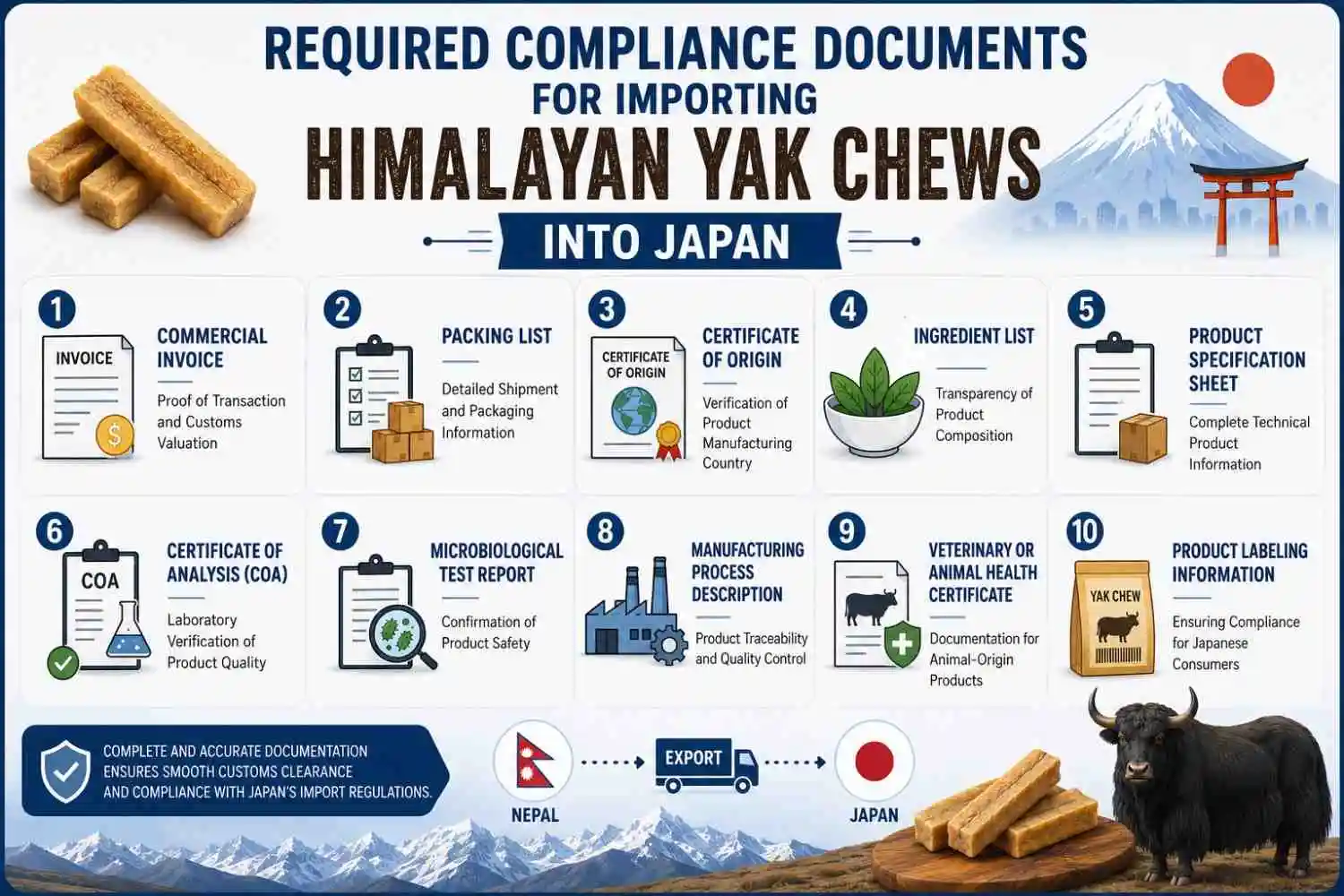
If you’re looking to import Himalayan yak chews into Japan, you’ll need more than just international shipping. Distributors and retailers in the Japanese pet industry need to be confident that the products they are purchasing are safe, traceable and compliant with local regulations.
A complete documentation package helps Japanese importers complete customs procedures, verify product quality, meet labeling requirements and build trust with retail partners.
The following documents are generally required when importing Himalayan yak chews from Nepal to Japan.
1. Commercial Invoice: Proof of Transaction and Customs Valuation
The Commercial Invoice is one of the most important documents in any international shipment. It serves as the official sales record between the Nepalese exporter and the Japanese importer.
Japanese customs authorities use this document to understand the commercial value of the shipment and verify the details of the imported goods.
The Commercial Invoice should clearly include:
- Exporter’s company name and address
- Importer’s company name and address
- Product description
- Quantity and unit price
- Total shipment value
- Currency used for payment
- Incoterms (such as FOB, CIF, or EXW)
- Country of origin
For Himalayan Yak chews, the product description should be specific rather than general. For example, instead of writing “dog treats”, it is better to describe the product as “Natural Himalayan Yak Cheese Dog Chews.” Accurate invoicing helps prevent customs delays and ensures smooth import clearance.
2. Packing List: Detailed Shipment and Packaging Information
The Packing List provides a detailed breakdown of how the products are packed and shipped. While the Commercial Invoice explains the commercial transaction, the Packing List explains the physical contents of the shipment.
It normally includes:
- Number of cartons or packages
- Product sizes and quantities
- Net weight and gross weight
- Carton dimensions
- Packaging details
- Shipping marks and carton numbers
For wholesalers and distributors importing larger volumes, the Packing List is especially important because it helps warehouses verify incoming inventory and organize distribution efficiently.
A properly prepared Packing List also allows customs officers and logistics providers to quickly confirm that the shipment matches the declared information.
3. Certificate of Origin: Verification of Product Manufacturing Country
The Certificate of Origin confirms where the Himalayan yak chews were produced. For products imported from Nepal, this document verifies that the goods originate from Nepal and were manufactured there. This document may be used for:
- Customs verification
- Import records
- Supply chain transparency
- Retail documentation
For premium pet products, the Certificate of Origin also supports marketing value. The Himalayan origin story is an important selling point, and Japanese consumers often appreciate products connected to traditional production methods and authentic sourcing.
4. Ingredient List: Transparency of Product Composition
The Ingredient List provides a complete breakdown of the materials used to manufacture the yak chews. Japanese importers need this information to confirm that the product composition is accurate and suitable for sale in the Japanese pet market.
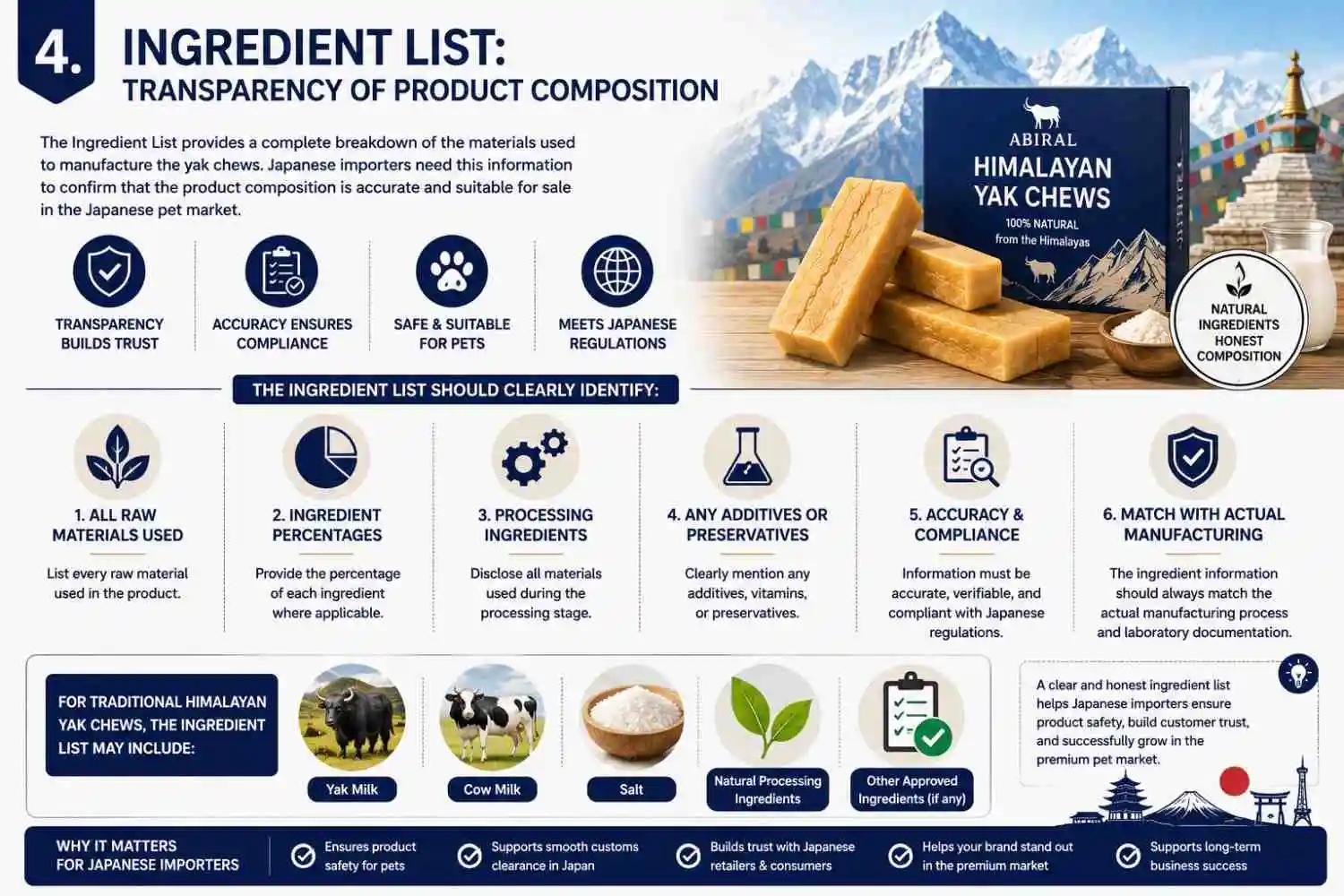
The ingredient list should clearly identify:
- All raw materials used
- Ingredient percentages where applicable
- Processing ingredients
- Any additives or preservatives
For traditional Himalayan yak chews, the ingredient list may include:
- Yak milk
- Cow milk
- Salt
- Natural processing ingredients
The ingredient information should always match the actual manufacturing process and laboratory documentation.
5. Product Specification Sheet: Complete Technical Product Information
The Product Specification Sheet provides detailed information about the product and helps importers, distributors, and retailers evaluate whether the product fits their market requirements.
A professional specification sheet should include:
- Product name
- Product description
- Ingredients
- Available sizes and weights
- Product dimensions
- Shelf life
- Storage conditions
- Packaging information
- Recommended usage instructions
Japanese wholesalers often review specification sheets before approving new products because they need accurate information for inventory planning, online listings, and retailer communication. A detailed specification sheet also reduces misunderstandings between suppliers and buyers.
6. Certificate of Analysis (COA): Laboratory Verification of Product Quality
The Certificate of Analysis (COA) is a laboratory document that confirms the quality and safety characteristics of the finished product.
It provides objective testing results that demonstrate the product meets agreed quality standards.
A COA may include testing information such as:
- Microbiological safety results
- Moisture content
- Protein levels
- Fat content
- Mineral content
- Contaminant screening
For Japanese buyers, a COA provides additional confidence that the supplier has proper quality control procedures in place. Many professional distributors require COAs before approving overseas pet food suppliers.
7. Microbiological Test Report: Confirmation of Product Safety
A Microbiological Test Report confirms that the product has been tested for harmful microorganisms. Since Himalayan yak chews are made from milk-based ingredients, microbiological control is an important part of product safety.
Testing may include:
- Salmonella testing
- E. coli testing
- Yeast and mold testing
- Total plate count analysis
These reports demonstrate that the production process effectively controls contamination risks.
Providing recent microbiological testing results helps Japanese importers meet customer expectations for safe and reliable pet products.
8. Manufacturing Process Description: Product Traceability and Quality Control
The Manufacturing Process Description explains how Himalayan yak chews are produced from raw materials to finished products. This document helps importers understand the supplier’s production controls and traceability systems.
It should explain:
- Source of milk ingredients
- Ingredient preparation
- Cheese-making process
- Drying and aging methods
- Quality inspections
- Packaging procedures
For Japanese distributors, understanding the yak chew manufacturing process is important because they need confidence that products are produced consistently and safely.
9. Veterinary or Animal Health Certificate: Documentation for Animal-Origin Products
Depending on the product classification and requirements at the time of import, Japanese authorities or buyers may request additional documentation related to animal-origin materials.
A veterinary or animal health certificate may confirm:
- Product safety status
- Animal health controls
- Production conditions
- Compliance with relevant requirements
Importers should confirm whether this document is required before shipment to avoid delays at customs.
10. Product Labeling Information: Ensuring Compliance for Japanese Consumers
Proper labeling is essential before Himalayan yak chews can be sold through Japanese retail channels. Japanese consumers expect clear, accurate, and easy-to-understand product information.
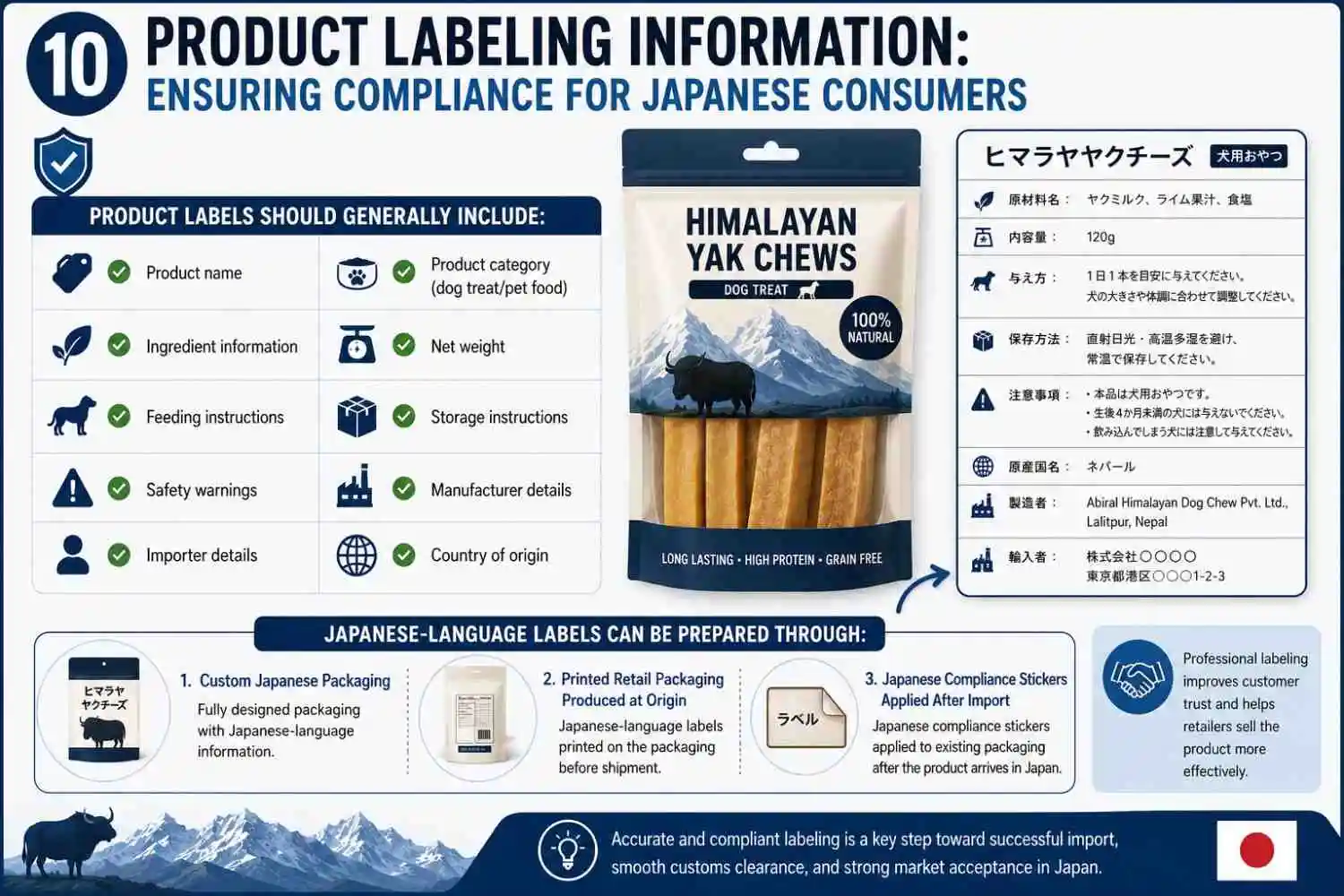
Product labels should generally include:
- Product name
- Product category (dog treat/pet food)
- Ingredient information
- Net weight
- Feeding instructions
- Storage instructions
- Safety warnings
- Manufacturer details
- Importer details
- Country of origin
Because Japan requires consumer information to be understandable locally, many importers prepare Japanese-language labels through:
- Custom Japanese packaging
- Printed retail packaging produced at origin
- Japanese compliance stickers applied after import
Professional labeling improves customer trust and helps retailers sell the product more effectively.
Why Complete Documentation Matters for Japanese Pet Businesses
For Japanese wholesalers and retailers, documentation is not only about meeting import requirements. It is also about building a reliable supply chain. A complete compliance package helps businesses:
- Reduce customs risks
- Speed up product approval
- Build retailer confidence
- Support premium pricing
- Establish long-term supplier relationships
For Himalayan yak chew suppliers from Nepal, providing professional documentation can become a major competitive advantage when approaching Japanese distributors and pet brands.
Import Process from Nepal to Japan
Once documentation and compliance requirements are completed, the import process typically follows these steps:
1. Supplier Preparation in Nepal
The import process begins at the supplier’s facility in Nepal. Before the products leave the country, the exporter must ensure that the Himalayan yak chews are properly produced, packed, and prepared for international shipment.
The supplier is responsible for:
- Completing final product quality checks
- Preparing finished yak chew products
- Confirming product quantity and packaging
- Preparing export documentation
- Arranging shipment details with the logistics company
For Japanese importers, this stage is important because problems at the supplier level can create delays later in the supply chain. A reliable Nepalese supplier should provide clear communication, accurate paperwork, and consistent product quality before every shipment.
2. International Shipment from Nepal to Japan
After the products are prepared, the shipment is arranged from Nepal to Japan. The best shipping method depends on the order size, budget, and delivery timeline.
Air Freight for Smaller and Premium Shipments
Air freight is often used for:
- Trial orders
- Product samples
- Smaller wholesale shipments
- Urgent deliveries
However, air freight usually has a higher transportation cost compared with sea shipping.
Sea Freight for Large Wholesale Orders
Sea freight is commonly used for:
- Large distributor orders
- Bulk imports
- Regular commercial shipments
Although sea freight takes longer, it is usually the preferred choice for established importers managing larger inventory volumes.
3. Customs Clearance in Japan
When the shipment arrives in Japan, the importer must complete customs clearance before the products can enter the domestic market. The Japanese importer or customs broker will submit the required documents to Japanese customs authorities.
Common documents include:
- Commercial Invoice
- Packing List
- AQS inspection
- Certificate of Origin
- Product specifications
- Testing documents
- Shipping documents
During the customs process, authorities may review:
- Product classification
- Declared shipment value
- Import documents
- Product description
- Compliance information
If all information is accurate and complete, the clearance process can proceed smoothly. However, missing documents, incorrect product descriptions, or unclear labeling can cause custom delays, additional inspections, extra storage cost and shipment release problems.
For first-time importers, working with an experienced customs broker in Japan is highly recommended. A customs broker can help manage paperwork and communicate with authorities on behalf of the importer.
4. Domestic Distribution
After customs clearance is completed, the Himalayan yak chews can move into the Japanese distribution network. Importers typically store products in warehouses before supplying different sales channels.
Common distribution channels include:
- Pet Specialty Stores
- Online Marketplaces
- Wholesale Networks
- Veterinary and Specialty Channels
Building a Smooth Import Supply Chain
Successful importers do not focus only on shipping products. They build a reliable supply chain from Nepal to Japanese customers.
Important factors include:
- Choosing a trustworthy supplier
- Maintaining consistent product quality
- Preparing accurate documents
- Planning inventory levels
- Working with reliable logistics partners
- Understanding customer expectations in Japan
A well-managed import process helps businesses reduce risks and create long-term opportunities in Japan’s growing premium pet market. For Japanese distributors and retailers, Himalayan yak chews can become a valuable product category when supported by reliable sourcing, proper compliance, and efficient distribution.
Conclusion
Importing Himalayan yak chews to Japan from Nepal presents an opportunity for pet wholesalers, distributors, and retailers looking to source high-quality natural products.
The secret of success consists in crafting a compelling product story and accompanied by a strict compliance framework. With safety, transparency, and quality being top priorities for Japanese consumers, businesses with sufficient documentation, premier suppliers, and appropriate branding will emerge as the most competitive in this sector.
If done well, Himalayan yak chews can be a great fit within the growing premium pet treat market in Japan.
Why Choose Abiral Himalayan Dog Chew for Importing to Japan?
Getting a good manufacturer partner is one of the most critical pieces of importing Himalayan yak chews in Japan. You need a supplier who knows international quality standards, robust documentation, and consistent delivery every time.
Abiral Himalayan Dog Chew helps Japanese pet businesses confidently import authentic Himalayan yak chews. We partner with wholesalers, distributors, retailers and private label brands seeking for top quality natural dog treats sourced from Nepal.
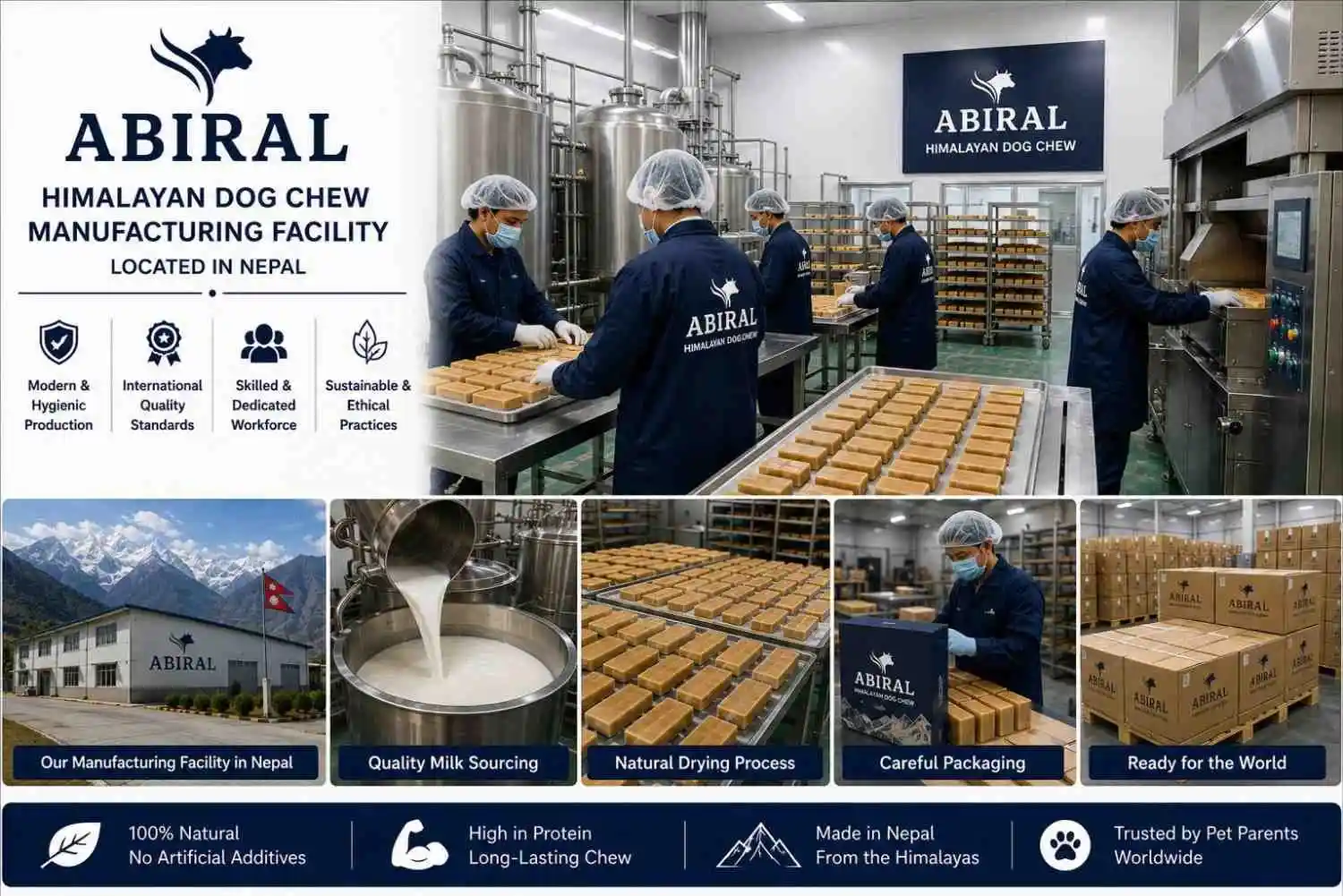
Here is why many international buyers choose us:
- Authentic Himalayan yak chews made in Nepal using traditional methods and natural ingredients.
- We use high-quality raw materials bought directly from local farmers for a product uniformity.
- Quality control and full inspection during manufacturing, drying, packaging, and final inspection.
- Export documentation that is needed to facilitate international trade and import concern
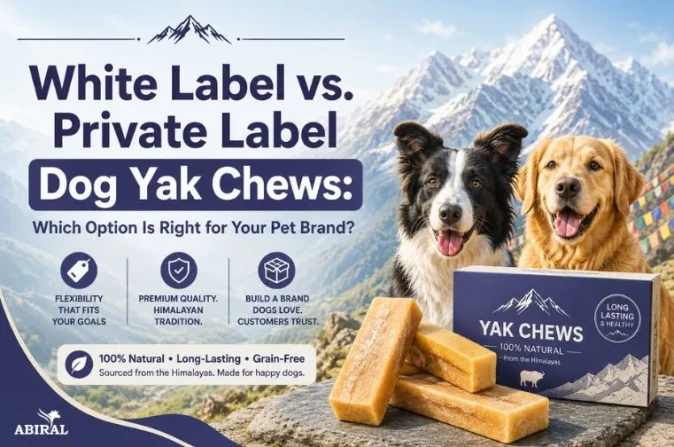
- Custom packaging and private label services to help you build your own pet brand in Japan.
- Reliable production capacity for both small and large wholesale orders.
- Experience serving international markets, understanding the quality and packaging expectations of global buyers.
- Clear communication and responsive support from inquiry to delivery, making the importing process easier.
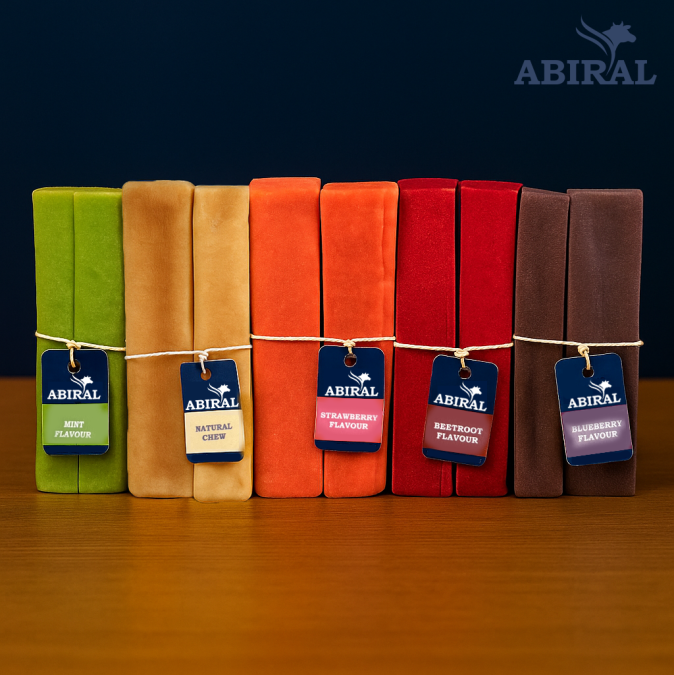
- Flexible product options, including different chew sizes, flavors, and packaging to match your customers' needs.
- Long-term business partnership, with ongoing support as your business grows in the Japanese pet market.
Abiral Himalayan Dog Chew is more than a dog chew manufacturer. We work as your trusted sourcing partner, helping you bring safe, premium, and authentic Himalayan yak chews to pet stores, distributors, and retailers across Japan. We proudly export our products to customers in the USA, UK, Japan, Canada, Europe, and other international markets, giving us valuable experience in meeting global quality, packaging, and export requirements.Our goal is to make importing simple, reliable, and successful for your business.
Frequently Asked Questions (FAQs)
1. Can I import Himalayan yak chews from Nepal to Japan?
Yes. Japanese businesses can import Himalayan yak chews from Nepal if the products meet Japan's import, safety, and labeling requirements. Partnering with a supplier that has experience in generating full export documentation helps smooth the importing process and avoid customs delays.
2. What documents are needed to import Himalayan yak chews into Japan?
Importers will typically require a Commercial Invoice, Packing List, Certificate of Origin, Product Specification Sheet, Certificate of Analysis (COA), Ingredient List, and other compliance documents. Depending on current import requirements some shipments may also require veterinary or animal health certificates.
3. Are people in Japan fond of Himalayan yak chews?
Yes. Many pet owners in Japan prefer dog treats that are natural, healthy and long-lasting. These natural Himalayan yak chews from milk are high in protein and provide a premium chewing experience for dogs, making them a great fit for this growing demand.
4. Do Himalayan yak chews need Japanese labels before selling?
Yes. Products sold in Japan must be labeled clearly in Japanese. Labels usually contain the product name, ingredients, feeding instructions, storage information, manufacturer details, importer details and country of origin to help customers understand the product.
5. How to select a reliable yak chew supplier from Nepal?
Find a supplier with export experience, good quality control and stable production flow. They should provide complete documentation, maintain consistent product quality, offer private label services if needed, and communicate clearly throughout the entire importing process.
6. Are Japanese pet brands allowed to sell Himalayan yak chews under their own brand?
Yes. Nepal has a lot of manufacturers that provide private label and custom packaging services. Japanese distributors and pet brands can create their own line of high quality Himalayan yak chews, manufactured by an experienced producer.
7. What makes Himalayan yak chews different from regular dog treats?
Himalayan yak chews are made from natural milk using traditional methods. They are long-lasting, high in protein, and contain no artificial flavors or unnecessary additives. Their authentic Himalayan origin also gives them strong appeal in the premium pet market.
8. Should I use air freight or sea freight when importing to Japan?
It depends on your order size. Air freight is suitable for samples and small orders which need fast delivery. Sea freight is generally less expensive for bigger wholesale shipments and regular imports with planned inventory.
9. Why is product quality important when importing yak chews into Japan?
Japanese consumers demand pet products that are safe and of high quality. Consistent manufacturing, proper testing and full documentation help build trust with retailers and customers. High-quality products also lower the risk of complaints and support long-term growth of the business.
10. Why should Japanese companies buy Himalayan yak chews from Abiral Himalayan Dog Chew?
Abiral Himalayan Dog Chew is a provider of authentic products, reliable quality control, export documentation, private label options, and flexible wholesale services. With experience supplying customers in the USA, UK, Canada, and Europe, Abiral can help Japanese businesses import natural yak chews into Japan with confidence.
Recent Posts